Appearance
Caching and Rate Limiting
Caching and Rate Limiting Graphics Coverage
Primary chapter graphic: Caching Layers Along a Request Flow, Cache Location Map, Redis and Memcached Cache Tradeoffs. Accepted graphics: 3. Reviewed non-signal pages: 0. Open graphics in review: 0. QA status lives in graphics audit and visual review ledger.
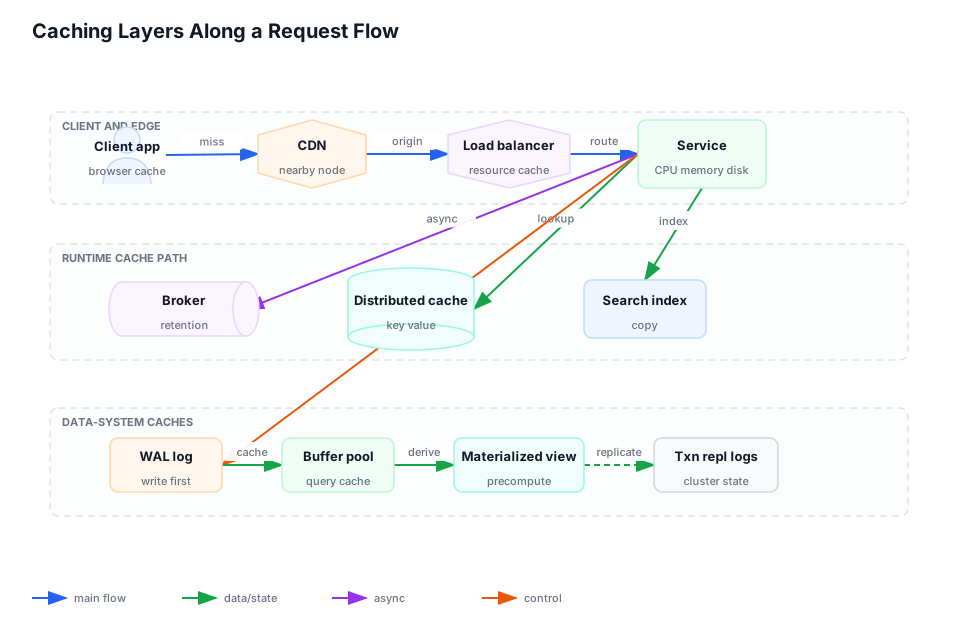
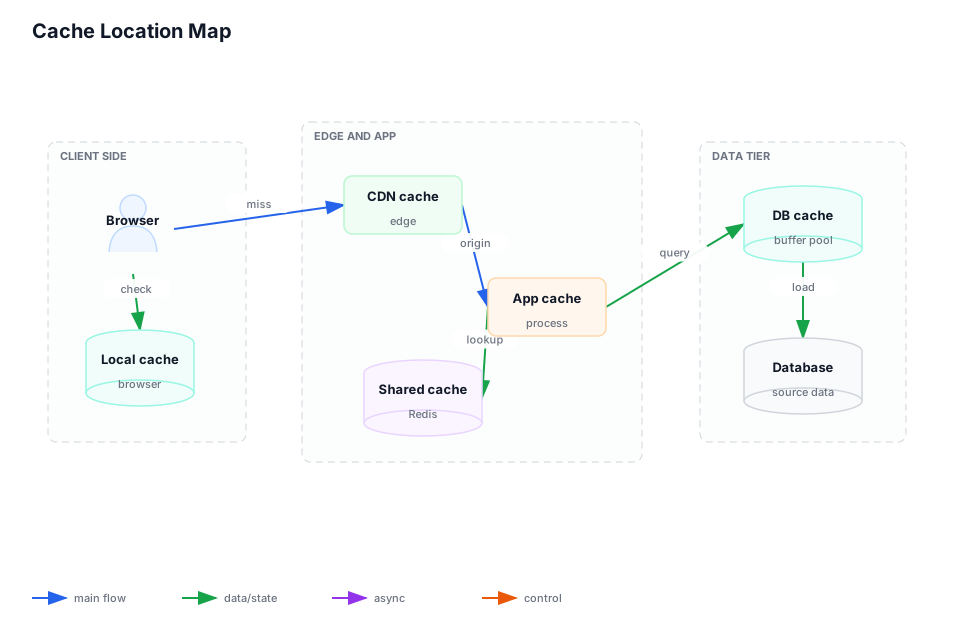
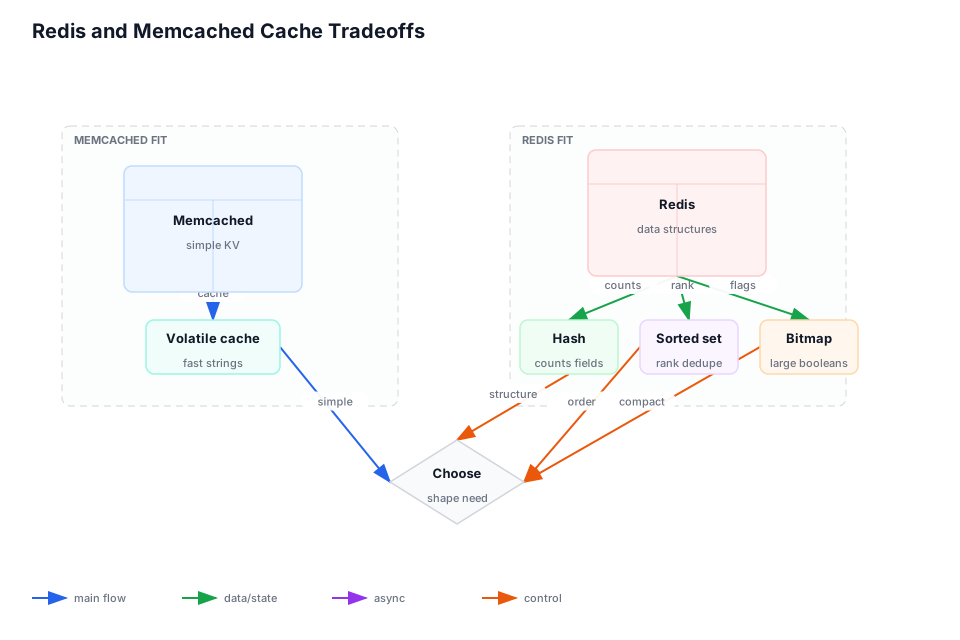
Corpus pages: p. 72, p. 90, p. 97, p. 171, p. 302 Coverage: 5 pages; low-confidence extraction ranges: p. 302
This chapter is part of Marius's owned architecture build corpus. The text routes decisions; durable implementation signal is carried by accepted graphics, reviewed non-signal decisions, and the linked QA audit.
Chapter Visuals
Accepted graphics carry the canonical design signal for this chapter. Each selected source page is either accepted as a graphic or explicitly marked non-signal in the source-faithful ledger. Review and QA state live in visual inventory, visual review ledger, and graphics audit.
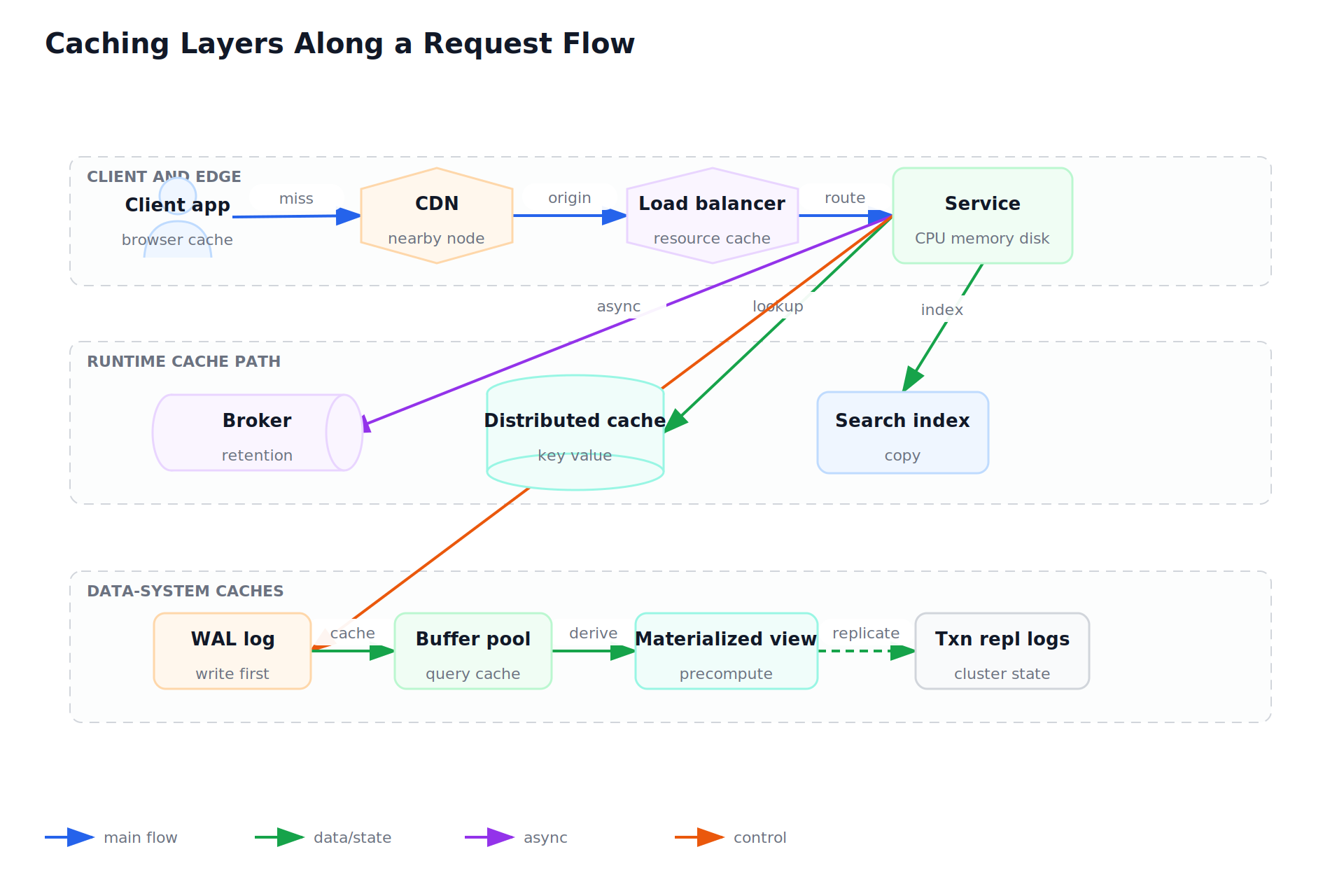
Caching Layers Along a Request Flow
- source-page: p. 302
- batch: 06
- status: accepted
- reviewer-status: reviewed
- fidelity-score: 0.9
- spec: bbg-p0302-caching-and-rate-limiting-caching.json
- svg: bbg-p0302-caching-and-rate-limiting-caching.svg
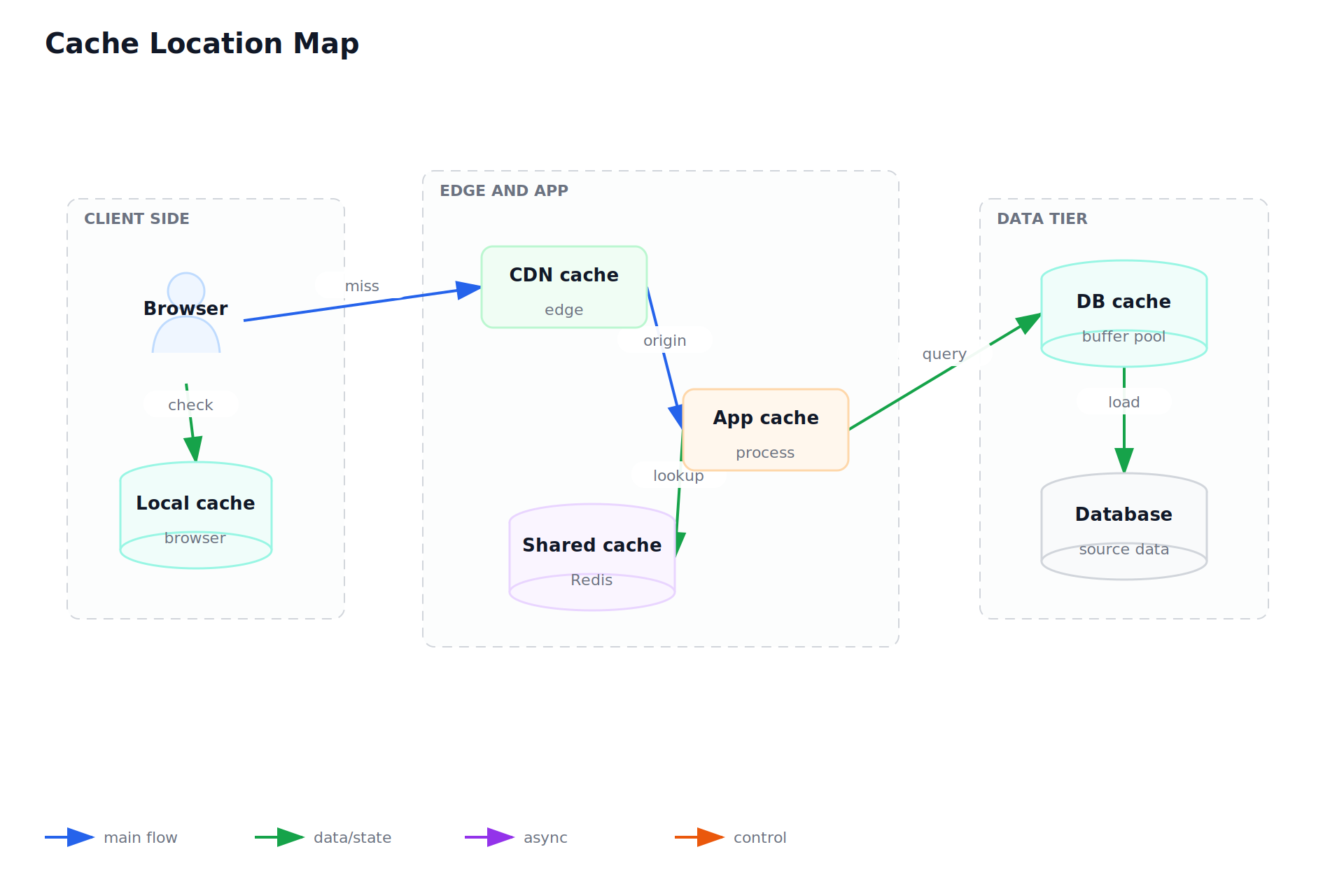
Cache Location Map
- source-page: p. 301
- batch: 13
- status: accepted
- reviewer-status: reviewed
- fidelity-score: 0.9
- spec: bbg-p0301-architecture-source-map-architecture-source.json
- svg: bbg-p0301-architecture-source-map-architecture-source.svg
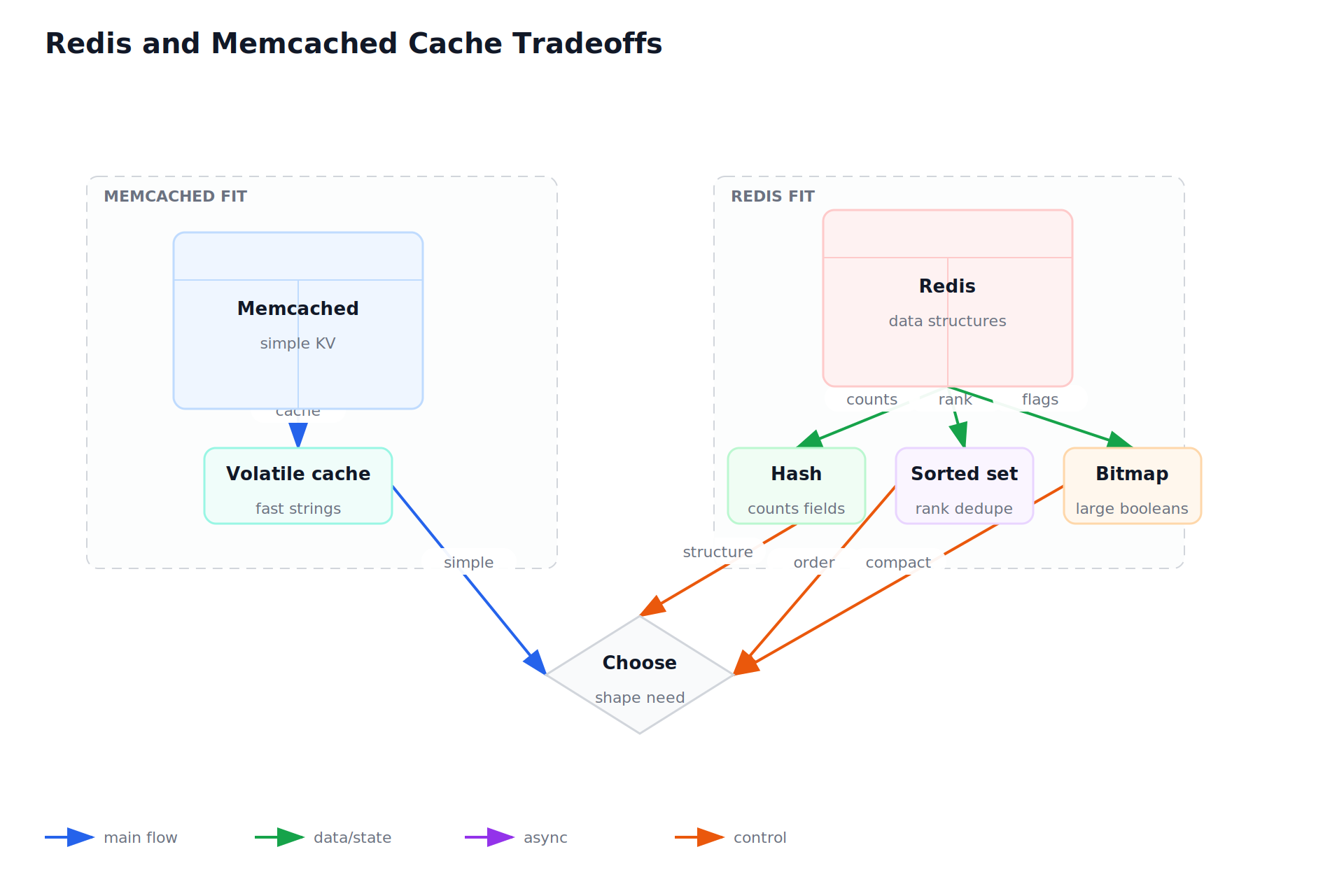
Redis and Memcached Cache Tradeoffs
- source-page: p. 97
- batch: 21
- status: accepted
- reviewer-status: reviewed
- fidelity-score: 0.9
- spec: bbg-p0097-caching-and-rate-limiting-caching.json
- svg: bbg-p0097-caching-and-rate-limiting-caching.svg
Open Review Queue
- none
Reviewed Non-Signal Pages
- none
Use When
- Repeated reads, renders, or vendor calls are too slow or expensive.
Avoid When
- Freshness and permission requirements are unknown.
Core Model
- Caching is a controlled staleness contract. Rate limiting is controlled fairness and protection.
- Prefer explicit ownership over accidental coupling. Every boundary should say who owns correctness, cost, data, recovery, and change.
- Use corpus page pointers for inspection, and keep the chapter notes focused on reusable design decisions.
Implementation Guidance
- Define cache key, TTL, invalidation, stale behavior, identity dimensions, and burst limits.
- Write the smallest useful design note: purpose, inputs, outputs, state, failure behavior, observability, and rollback.
- Choose the first implementation that can be tested against the real workflow without hiding a known production risk.
Tradeoffs
- Long TTLs reduce cost but can make users distrust the result.
- Centralization reduces duplicated work but can become a bottleneck when every team needs exceptions.
- Specialized infrastructure helps at scale, but it must earn its operational cost.
Failure Modes
- A user-specific response is cached under a shared key.
- The diagram shows boxes but not ownership, retry behavior, data freshness, or user-visible failure.
- The system has no proof path for the highest-risk assumption.
Decision Checklist
- Track hit rate, stale serves, evictions, limited requests, and bypass behavior.
- Name the owner, source of truth, timeout, retry policy, and evidence that the path works.
- Add one regression check for the failure mode most likely to recur.
Neutral Automation Examples
- A catalog service caches public product metadata while never caching customer-specific prices without a scoped key.
- A neutral internal automation starts with fixtures, then adds credentials, permissions, and production scheduling only after the boundary is tested.
- A customer-facing workflow keeps irreversible actions behind explicit approval until metrics show it is safe to automate further.